
 EN
EN
 CS
CS
 DA
DA
 NL
NL
 FI
FI
 FR
FR
 DE
DE
 EL
EL
 IT
IT
 JA
JA
 KO
KO
 PL
PL
 PT
PT
 RU
RU
 ES
ES
 TL
TL
 ET
ET
 TH
TH
 MS
MS
 BG
BG

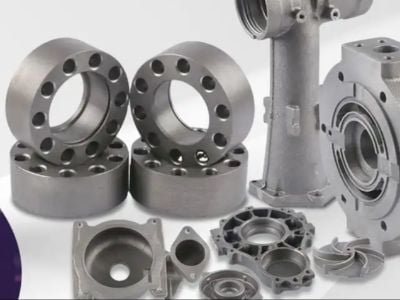
When you need iron parts for your projects, how they are made can really change the costs. Think of it like buying a cake – you can get a big, simple one for a party, or a fancy, decorated one for a special day. Both are cakes, but the way they are made makes the price different. LF understands that knowing these differences is super important for businesses that buy lots of parts. We want to help you make a smart choice so you get the best value for your money
What's the Wholesale Advantage
Buying iron casting parts in large amounts, as businesses do, is called wholesale. When a company like LF makes many of the same iron parts, we can often make them cheaper per piece. This is because setting up the machines and the process for a big order costs a lot of money, but when spread over thousands of parts, the cost for each one goes down a lot. It is like buying a whole pack of cookies instead of just one – you get more for less per item. For big buyers, the price per part is much lower than if they had only bought a few. We see this time and again: when a customer needs a large quantity for a production line, the savings are big. It is not just about the price, though; it is about efficiency too. When we run a large batch of sand parts, the team gets into a rhythm, and production moves smoothly. Less wasted time and fewer errors mean a lower cost for you. Imagine a baker making hundreds of cupcakes for a wedding. They buy flour, sugar, and eggs in bulk, which is cheaper per pound. They also use big mixers and ovens for a long time, producing more cupcakes per bake with no separate setup or cleaning for just one or two. That is the wholesale advantage. For LF, this is key to offering good pricing to our wholesale customers. We invest in smooth, cost-effective processes for large orders because we know what our partners need. It is a win-win situation: you get your parts at a better price, and we run our factory better. Sometimes you might think, "Why is a part cheaper for 1,000 pieces than for 10?" Setup costs, running machines continuously, and buying bulk raw materials make a big difference. We always provide upfront savings for our clients
Understand Iron Casting Price Differences for Wholesale Buyers
Wholesale buyers for Cast Iron rut parts will notice that different manufacturing methods lead to different prices, and it is not always straightforward. At LF, we use two main methods to show this clearly: sand casting and precision casting. Sand casting is like making a mold from sand. It is common and often cheaper for iron parts, especially for larger, complex shapes where fine details are not the top priority. It is robust and reliable, and it can handle many designs. Sand molds are made and then broken after each use, which is good for making many parts without needing to keep a mold intact for a long time. This makes the initial tooling cost lower. For wholesale, if you need a lot of parts and a smooth surface or exact size is not your main concern, sand casting from LF is highly cost-effective. For example, for a large, sturdy bracket used in construction, sand casting is the best choice. The price is low because the mold material is cheap, and the process requires less intensive machine finishing than precision casting. However, the surface is rougher, and there might be slight variations from part to part, which is perfectly fine for many uses. Precision casting, on the other hand, is a different game. Also called investment casting, it involves making a wax model, covering it with a ceramic shell, melting the wax out, and pouring in the molten iron. This creates a smooth surface, tight tolerances, and exact dimensions with very little error. It is ideal for accurate parts like engine components or medical equipment. The price is higher because the process is more involved, requiring a master pattern, wax, ceramic shells, and a lot of finishing work. The tooling is also expensive because it needs to be precise for the wax models. So for wholesale, if you need extreme accuracy and a smooth finish, and the cost is acceptable for that quality, precision casting is the way to go. This is perfect for high-performance car parts where every millimeter counts and the engine needs to look good. LF understands our customers' diverse needs. Some prioritize savings and work with sand casting, which is less precise for bulk orders, to save money. Others need a perfect finish and exact dimensions, so they invest more. Our job is to guide you. We talk about your needs and ask: How precise does it need to be? What is its use? Is the surface appearance important, or will it be inside a machine where no one sees it? Understanding this helps us choose the right method to balance your budget and performance. Sometimes, a part can suit sand casting with some extra finishing work, providing a middle ground. Customers who initially lean toward precision casting for everything often realize that sand casting is enough, allowing them to save substantially on large orders
Sand or Precision? Choose the right way for Iron Parts
When you need Ductile Iron Casting parts made, there are different ways to do it, and two of the most common are sand casting and precision casting. It is like baking cookies, where you can use a simple cutter or a fancy mold for detailed shapes; sand casting is like the simple option, while precision casting is the fancy one. Sand casting is an old and popular way to make iron parts. Imagine packing damp sand around a model of the part, taking the model out to leave a hollow shape, and then pouring hot, melted iron into the sand mold. Once it cools and hardens, you break the sand away, and you get your part! It is great for big parts or for making a lot of items quickly. It is usually less expensive to start because sand molds are not complicated. However, the surface is not perfectly smooth, as it can have tiny bumps and a rough texture. If you need exact shapes and a smooth finish, it is not the best choice, but the LF team knows that for many projects, sand casting offers a good balance of cost and usability. Precision casting uses detailed, smooth molds and is sometimes called investment casting. First, we make an accurate, smooth wax model of the part, which is then dipped into liquid ceramic many times to build a thick shell. After it dries and hardens, heat is applied to melt the wax out, leaving a hollow ceramic mold that is exactly smooth on the inside. Then, the melted iron is poured in. Once it cools, we break the shell to get the finished part. This method makes a smooth surface and precise shapes, which is perfect for complex parts or items that need to fit together perfectly. It is more expensive than sand casting because it requires more steps and special materials, but the parts look better and need less finishing work. LF knows that when high quality and detail are needed, precision casting is preferred. So, which one should you choose? It depends on what the part does and how it needs to look. For a simple, strong part where you want to keep costs down, sand casting is best. This applies to things like machine bases and brackets, where a smooth finish is not the most important factor, and LF can help figure out if sand casting is right for your project. But if the part needs to look good, have exact measurements, or feature intricate details, precision casting is the way to go. This is necessary for engines, medical equipment, or decorative pieces where detail matters, as it gives you high quality and accuracy. LF is committed to helping you select the method that best meets your requirements for the best outcome for your iron parts
Wholesale Iron Casting Price Trends - Sand vs Persicion
When you buy iron parts in large quantities, the price is a big deal, so it helps to know how costs differ between sand casting and precision casting. It is like T-shirts, where a plain one bought in bulk gives you a good price, but a detailed print costs more. Sand casting is more affordable for making lots of parts because the materials and the process are cheaper. Sand molds are simple, and the equipment used is not specialized. If you need many identical parts and a smooth finish is not your top priority, sand casting is highly cost-effective. LF knows that when buying in bulk, managing costs is crucial, which gives sand casting a clear advantage. Precision casting comes at a higher price and is especially costly for small quantities. This is due to the extra steps involved, the expensive ceramic materials, and the skilled labor needed to create accurate molds, which makes the setup costs higher. However, for a very large number of parts, the price difference per part becomes smaller, making the smooth and precise results worth the extra investment. LF works to provide competitive pricing for both methods, ensuring you get great value
Which Iron Casting Method Better Wholesale Value
Deciding which method offers better value does not always mean choosing the cheaper option because the best use of your money is based on your specific needs. LF believes that true value means meeting your project goals. If your main goal is to get strong, functional parts in large numbers without needing a super smooth finish or precise details, then sand casting offers a better value. It gives you more parts within your budget to get the job done, making it a practical and economic choice for many industrial applications. But if a smooth surface finish, exact dimensions, and a complex design are important for performance or appearance, precision casting provides better value in the long run. Even though it costs more upfront, it delivers superior quality with fewer defects and eliminates the need for post-processing, resulting in a better overall product. This can save you money and hassle later on. The LF team is here to guide your decision, ensuring that the value we deliver aligns perfectly with your requirements and expectations.


